
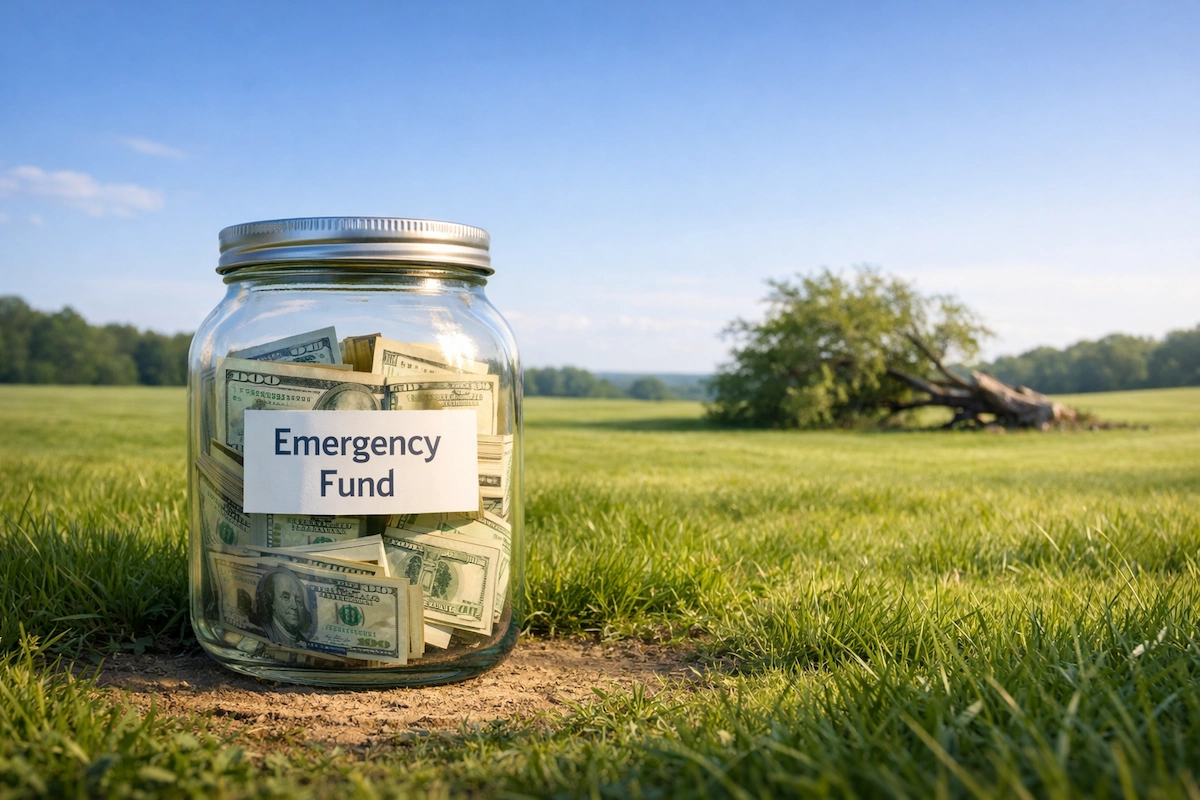
Life doesn’t send calendar invites before chaos arrives.
Cars break down. Kids get sick. Jobs change. And somehow, the universe always picks the worst possible moment to test your patience, and your finances!
Here’s the empowering truth:
You don’t need a high income, perfect discipline, or a windfall to build a real emergency fund.
You need a simple system — and once it’s in motion, it becomes one of the most confidence-building habits in your entire financial Orchard 🌳.
This is your shock absorber. 🛡️
Why an Emergency Fund Is Your First Line of Defense
An emergency fund isn’t about pessimism.
It’s about protecting momentum.
Without one, even a small surprise expense can topple your financial structure. People end up:
Putting emergencies on credit cards
Draining investments
Taking out loans
Slowing or reversing long-term progress
With an emergency fund, that same surprise becomes an inconvenience, not a catastrophe.
The real gift is psychological freedom 🧠.
It’s the steady confidence of knowing, “I can handle whatever shows up.”
That feeling changes how you make every other financial decision.
How Much You Actually Need (A Step-Up Plan That Works)
Traditional advice says “3–6 months of expenses.”
That’s solid guidance, eventually.
But when you’re starting from zero, that number feels overwhelming and demotivating.
So instead of aiming for the summit, we build momentum first 🌱.
Here’s the YMO step-up method:
Step 1 — $500
Your panic buffer. Flat tires, urgent repairs, surprise bills.
Step 2 — $1,500
Covers most common emergencies that push people into debt.
Step 3 — 3 months of expenses
Your stability zone. You can breathe here.
Step 4 — 6 months (or more)
Especially important for entrepreneurs, freelancers, or variable income earners.
Small steps create big confidence.
Confidence creates consistency.
If you want to stay consistent without relying on willpower, pair this plan with The Beginner’s Guide to Automated Money: Let Systems Make You Rich
Where to Keep Your Emergency Fund (Safe + Accessible)
This money has one job: protect you.
Not grow aggressively. Not impress anyone.
Your emergency fund must be:
Safe
Liquid
Separate from daily spending
Here’s the ideal hierarchy 🛡️:
High-Yield Savings Account (HYSA)
FDIC or NCUA insured, earns interest, accessible quickly.
Money Market Account
Often similar to a HYSA, sometimes with slightly higher yields.
Short-Term Treasury Bills (3–6 months)
Only after you’ve saved at least $1,000. A modest return with minimal risk, if you’re comfortable with a few days of access delay.
Avoid parking emergency funds in stocks, crypto, or anything volatile or illiquid.
This money is your safety net — not a growth engine.
Mainstream financial education reinforces this same principle, emphasizing liquidity and safety over return when it comes to emergency savings. Fidelity’s guidance reflects this clearly.
How to Start From Zero (Even If Money Feels Tight)
The biggest mistake people make is believing they need to start big.
You don’t.
You need consistency ⚙️.
1. Automate a tiny weekly transfer
$5, $10, $20 — whatever fits. The habit matters more than the amount.
2. Use the “found money” rule
Redirect 25–50% of unexpected money like:
Tax refunds
Bonuses
Cash back
Side-hustle income
You won’t feel the loss, but your fund will grow faster than expected.
3. Patch your top 1–2 spending leaks
Small automatic purchases quietly sabotage saving more than big splurges.
To identify and fix those leaks, revisit The Spending Habit That Secretly Makes You Broke (And How to Fix It Fast).
4. Add friction to impulse spending
Delete one app.
Remove saved cards.
Use a 24-hour rule for purchases over $30.
5. Revisit monthly (five minutes)
Awareness compounds just like money 🧠.
Why an Emergency Fund Makes Everything Else Easier
Once this safety net exists, your entire financial strategy improves:
Debt payoff accelerates
Saving feels easier
Investing becomes less emotional
Surprises stop derailing progress
Confidence increases
Your financial identity upgrades
This is where true wealth psychology begins — feeling grounded, stable, and unshakeable.
For deeper mindset alignment, explore YMO’s wealth psychology article.
The 30-Day Emergency Fund Challenge
Week 1
Open a HYSA and automate $10–$25 per week.
Week 2
Cut one leaky expense and redirect the savings.
Week 3
Sell something you don’t need. Add the full amount.
Week 4
Apply the 50% “found money” rule to any extras.
Most people reach $500 faster than they ever expected.
Final Word 🌳
An emergency fund is like planting the first tree in your Orchard.
It stabilizes the soil.
Buffers the storms.
Creates the conditions for long-term growth.
Once this foundation is in place, every future move… saving, spending, investing — becomes calmer, clearer, and more powerful.
To continue building out your Money Skills foundation, return to the pillar hub: